…Hybrid and Flexible Work Models Are Here to Stay. The 9-to-5 office routine being replaced by hybrid, remote, and flexible arrangements. At our company of over 100 people, we have team members, both employees and contractors, spread across 12 countries and 11 U.S. states. By hiring based on talent rather than location, we’ve built a diverse and dynamic workforce. Our hybrid model, anchored by just three physical offices, minimizes administrative complexity while supporting a healthy work-life balance. This approach empowers individuals to thrive professionally while staying present in their personal lives…
There have been major disruptions in recent years that promise to change the very nature of work. From the ongoing shifts caused by the COVID-19 pandemic, the impacts caused by automation, and other possible disruptions to the status quo, many wonder what the future holds in terms of employment. For example, a report by the McKinsey Global Institute estimated that automation will eliminate 73 million jobs by 2030.
To address this open question, we reached out to successful leaders in business, government, and labor, as well as thought leaders about the future of work to glean their insights and predictions on the future of work and the workplace.
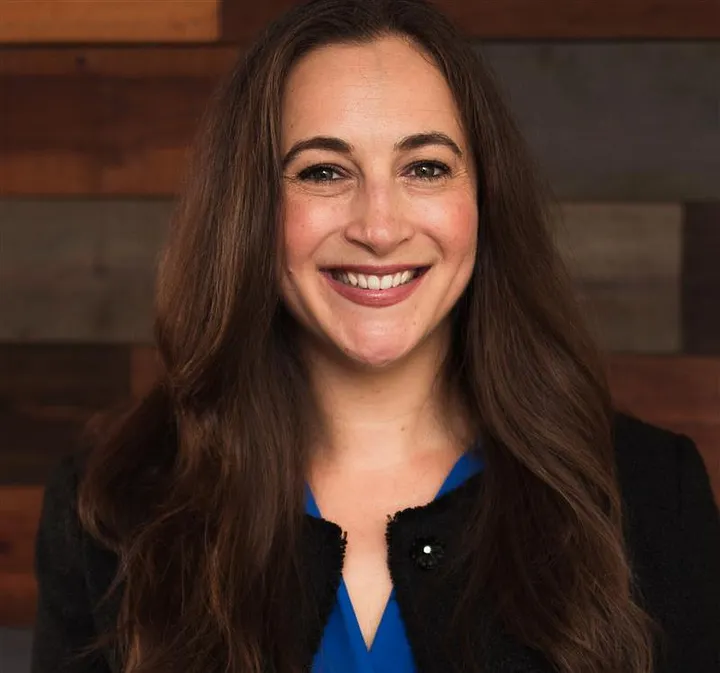
As a part of this interview series called “Preparing For The Future Of Work”, we had the pleasure to interview Sky Mehringer (VP Global People Solutions) at HSP Group.
Sky is a seasoned business professional with 15 years of experience in international business expansion services. Her expertise focuses on highly complex jurisdictions, M&A, and multi-country employee transfer due diligence as well as local HR, tax and legal compliance and operational readiness. After more than a decade supporting companies launching and expanding their businesses in over 60 countries around the world, Sky now oversees a global team of international HR and business expansion experts who support both public and private organizations to optimize their HR strategies, build processes, develop policies, and manage their international workforce. She holds a double B.A. in International Affairs and Economics from The George Washington University, and an MBA in International Management from the Middlebury Institute of International Studies. Sky lives in Rockville, Maryland, is fluent in Spanish, loves to travel and in her free time enjoys baking, hiking and spending time with her husband and cat, Chloe.
Thank you so much for joining us in this interview series! Our readers like to get an idea of who you are and where you came from. Can you tell us a bit about your background? Where do you come from? What are the life experiences that most shaped your current self?
I was born in New Mexico but cannot really say I’m from anywhere in particular. I’ve lived in multiple states throughout the U.S., Puerto Rico, France, Chile and Costa Rica. I was exposed to both Spanish and French at a young age but ultimately, the Spanish won out. I was raised in a family that is very “outwardly focused” — open-minded, a love of learning, curious about language, culture and religions, and socially and environmentally conscious. These experiences have not only made me a resilient and adaptable person but have also helped to shape the way I view the world, how I believe people should be treated and how I’ve chosen to live my life, with respect for others and our planet as well as choosing a career that is in the international space. I love that I get to interact and work with brilliant and amazing people from all over the world on a daily basis, and that in this industry in particular, I learn something new almost every day.
What do you expect to be the major disruptions for employers in the next 10–15 years? How should employers pivot to adapt to these disruptions?
We expect that one of the most significant disruptions for employers over the next 10 to 15 years will be the continued rise and integration of artificial intelligence and automation, which will transform job roles, workflows, and required skill sets across nearly every industry. Employers will need to pivot by investing in continuous learning, reskilling programs, and creating agile workforce models that can adapt to rapidly changing technologies.
Additionally, demographic changes, including an aging population and the entrance of Gen Z (those born from 1996 to 2010) and older Gen Alphas (those born from 2010 to 2024), into the workforce, will reshape how organizations attract and retain talent, as well as employee expectations. This shift will require employers to adapt by offering greater flexibility, emphasizing purpose-driven work, and supporting diversity, equity, and inclusion as non-negotiable business values. Gen Z is known for their resilience, independence, and social consciousness and Gen Alpha is known for being globally connected. Based on this, the employee life cycle from hire to retirement will continue to evolve and include an increased demand for sustainability and ethical governance.
Another major trend that we are seeing, especially in our industry and in a post-pandemic environment, is the desire by employees to be able to “work from anywhere.” This includes both solely working from home here in the United States as well as living and working overseas, either in one country or even multiple countries throughout the year(s). Employers will need to be prepared to address these demands by, especially younger, employees in order to attract and retain top talent. Some questions we would recommend employers ask themselves, include: As an employer, do we support work from home? What is our company’s policy as it relates to work from home or flexible working? Do we or are we willing to provide compensation or additional benefits or allowances to support employees working from home? Primarily domestic employers will also likely need to consider what it means to have employees living and working overseas, including whether they’re willing to take on that liability.
The choice as to whether or not a young person should pursue a college degree was once a “no-brainer”. But with the existence of many high-profile millionaires (and billionaires) who did not earn degrees, as well as the fact that many graduates are saddled with crushing student loan debt and unable to find jobs it has become a much more complex question. What advice would you give to young adults considering whether or not to go to college?
Part of the challenge, we think, for young adults today is weighing expectations (academic, family, personal) against the realities of college education. Deciding to pursue a college degree in our country today really requires careful consideration and should be looked at from a variety of factors — individual goals, financial realities, and career aspirations. While a degree once guaranteed upward mobility and job security, the modern landscape is far more nuanced.
Young adults should begin by reflecting on what they want to achieve. If a chosen career path, such as medicine, engineering, accounting, or law, requires a formal degree and credentialing, then college remains a critical step. However, for those interested in entrepreneurship, trades, creative industries, or some technology, alternative routes such as certifications or apprenticeships may offer more cost-effective and targeted pathways.
It’s important to weigh the cost of tuition against the potential benefits in career opportunities and earning potential. Choosing a degree program with strong employment prospects, seeking in-state tuition or scholarships, and minimizing student debt are key strategies. In addition, we would caution them to not rush a decision about going straight to college if they are unsure about what their long-term career aspirations are. There are alternatives to a traditional 4-year university, such as community college (even as a jumping off point), apprenticeships, work abroad programs, etc. that can help broaden horizons, give young adults exposure and provide critical soft skills experience as well as potential job experience that they may not obtain while at university. If I could do it all over again, I would have gone to an in-state school or community college to start before transferring to a private 4-year university to give myself time to consider what I really wanted to do and to save money.
At the same time, we would also encourage reminding students that college can offer more than just a diploma; it can foster critical thinking, networks, and personal growth.
Success is no longer defined by one path, and both college and non-college routes can lead to meaningful, prosperous careers.
Despite the doom and gloom predictions, there are, and likely still will be, jobs available. How do you see job seekers having to change their approaches to finding not only employment, but employment that fits their talents and interests?
We believe that human-led jobs will continue to exist, despite widespread concerns about automation, AI and economic shifts. However, the way individuals find, and secure meaningful employment is evolving rapidly and the old adage “it’s who you know” is becoming even more relevant than it has ever been.
Job seekers can no longer rely solely on traditional methods such as submitting resumes/CVs to online postings, especially with the use of ATS (applicant tracking systems) that scan your application for key words, and virtual recruiters that are basically replacing the initial HR/recruiter screening call with an automated interview. Often, these applications go into a deep, dark hole never to be looked at by human eyes. We would recommend that individuals spend some time, if they are able to, seeking input or guidance on ATS that can help them craft their resume/CV in ways that are more likely to get picked up by the automation so that their application does eventually make it to be seen by human eyes.
In addition, they must actively leverage professional networks and engage with digital platforms that showcase their expertise. Building a presence on sites like LinkedIn or even Instagram or TikTok, maintaining an up-to-date portfolio, connecting with their local alumni network, volunteering and participating in industry conversations, among others, are all essential.
We would also encourage individuals to focus on lifelong learning and adaptability. As industries evolve, employers increasingly value soft skills, like communication, collaboration, and resilience, alongside technical expertise. Job seekers who are proactive about reskilling and upskilling will be better positioned to navigate changes and find roles that match both their talents and their passions.
The statistics of artificial intelligence and automation eliminating millions of jobs, appears frightening to some. For example, Walmart aims to eliminate cashiers altogether and Dominos is instituting pizza delivery via driverless vehicles. How should people plan their careers such that they can hedge their bets against being replaced by automation or robots?
The rise of artificial intelligence and automation does seem daunting, but we would argue that the key lies not in resisting change but in adapting to it with intention and strategy.
More and more, it will be important for people to focus on developing skills that are difficult to automate, such as emotional intelligence, creativity, critical thinking, leadership, and complex problem-solving. These human-centric skills remain essential in a great majority of fields and industries. Adding to this, individuals should try to pursue careers in automation-resilient industries, such as those involving relationship-building, strategic decision-making, hands-on care, and emerging technologies. Fields that require adaptability and continuous learning, rather than routine repetition, are more likely to offer long-term stability.
As we’ve mentioned previously, lifelong learning is a powerful key to staying relevant, curious, and adaptable. Whether through formal education, certifications, online courses, or experiential learning, staying ahead of industry trends is crucial. The future of work isn’t about avoiding machines; it’s about doing what machines cannot.
Technological advances and pandemic restrictions hastened the move to working from home. Do you see this trend continuing? Why or why not?
The trend is evolving and is likely to continue in some form, reshaping the future of employment in many ways, including the “work from anywhere” model mentioned earlier on. Rather than remaining fully remote, many employers are adopting hybrid models, blending in-person collaboration with remote flexibility. This approach supports innovation, team cohesion, and employee satisfaction while accommodating diverse needs.
Organizations have seen tangible benefits: cost savings, increased productivity, and access to broader talent pools. At the same time, employees have embraced the flexibility, reduced commute times, and improved work-life balance that remote and hybrid models offer. For these reasons, many companies now view remote work as a strategic advantage and a way to attract talent, rather than a temporary necessity as it was first used during the pandemic.
What societal changes do you foresee as necessary to support the fundamental changes to work?
As work continues to evolve in response to technology, globalization, and shifting expectations, we believe that society must also adapt in several ways to support these fundamental changes.